PNWPhotos.com a friendly and growing community of photographers with an interest in the Pacific Northwest region.
We feature a Photography Discussion Forum and Pacific Northwest Photo Gallery. It's a fun and friendly place to talk with other photographers, ask questions, share you knowledge, view and post photos and more!
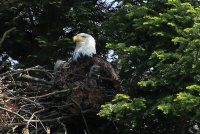
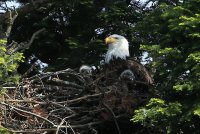
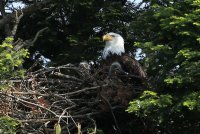
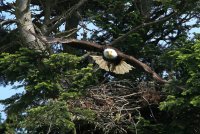
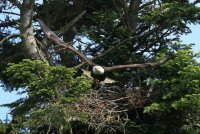
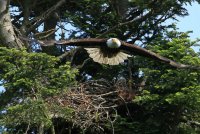
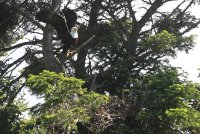
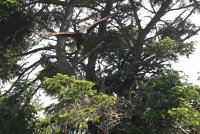
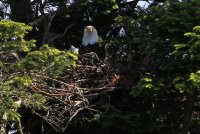
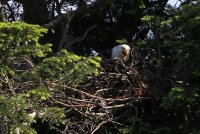
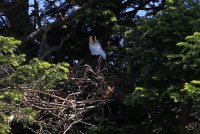
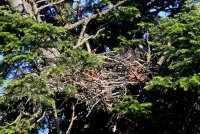
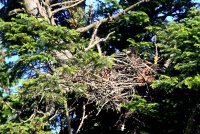
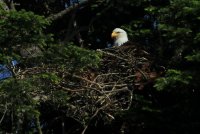
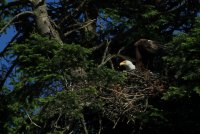
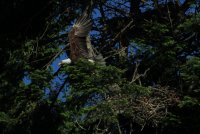
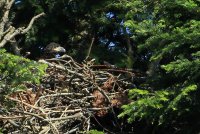
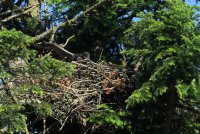
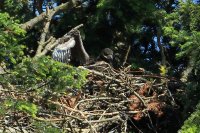
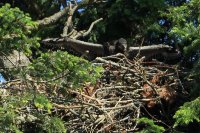
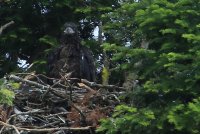
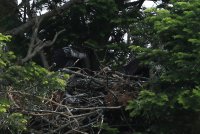
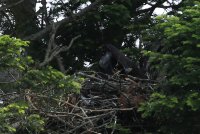
Monday (5/12/14) Terry, Janine, and I got our first shots of the two Pt. Edwards eaglets. We are still a little worried as we did not see the male making a food delivery in the 2.5 hours we staked out the nest.
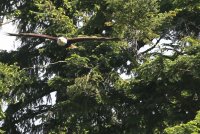
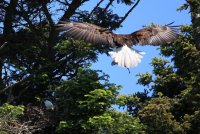
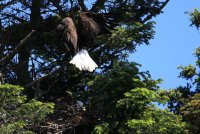
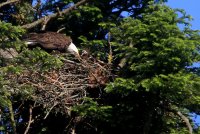
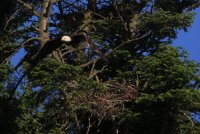
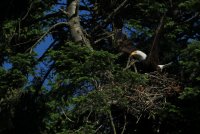
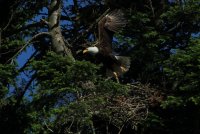
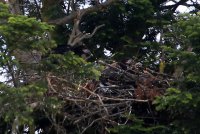
The female briefly left the nest for what appeared to be a search for the male. If you look closely at these photos, you can see the eaglets on the right side of the nest below the female's left wing as she takes off.
We heard her screeching from a nearby nest after she flew off.
Taking shots of the mother and eaglets presents special lighting challenges. The best time to photograph the nest is in the afternoon when the sun is shining into it. Exposure is a balance of under exposing so the adult's bright white head and tail feathers are not washed out while still leaving enough light so the darker colored babies can be seen.
I went looking for the eagle nest today but wasn't able to locate it. Is it by the public trail from the Pt. Edwards condos? Any advice would be appreciated! (Feel free to PM me for the safety of the nest.)
Thanks,
Tyler
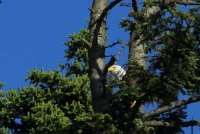
Monday (5/19/14) Terry, my son Daren, and I drove up to check on the Pt. Edwards eagles. One of the adults was perched on a branch above the nest, the first time I have seen one there. The babies were in the back of the nest. I got some poor photos of them which I will not bother to post.
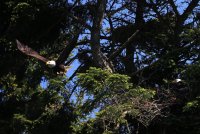
The adult took off and flew west, directly over us.
It sneaked back to the nest while I wasn't looking.
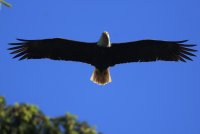
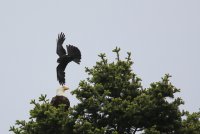
Two other eagles were in the vicinity, which really upset the eagle on the nest. The first eagle, which I think was a juvie, made a flyby past the nest. The second eagle, an adult, made a high flyover of the nest.
The eagle's mate arrived with a fish, deposited it in the nest, and exited a brief time later.
The eagle on the nest did not even look up when the second eagle flew in. I am amazed at how they can distinguish between their mates and other eagles at a distance.
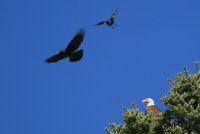
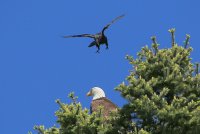
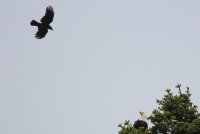
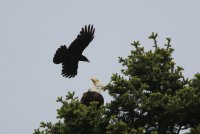
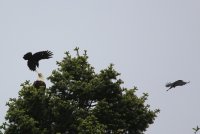
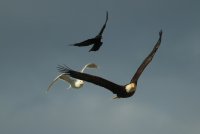
The second eagle flew to a nearby sentry tree, where it was harassed by the evil minions of the Dark Lord. Photographing the two birds together is difficult as one must underexpose for the eagles and overexpose for the crows.
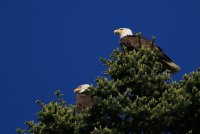
The eagle on the nest flew over to take a break with its mate.
Monday (5/26/14) my son and I stopped by the nest. The mother(?) was flying ahead of us with a food delivery as we drove towards the nest. I had forgotten to bring along the 500L telephoto (long a story), so I had to settle for the 100-400L zoom + 1.4x TC.
Looking back to my eaglet thread of 2013, the 2014 eaglet in these photos is about the same size as its 2013 siblings for this date. I only saw one eaglet Monday, but it took us several visits last year before we saw the second eaglet. For the moment I don't suspect fratricide.
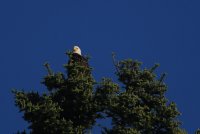
The mother flew to the sentry tree after making the delivery.
Friday's (5/30) late afternoon bright sunlight brought out the difficulties of photographing bald eagles. I took these shots of the female using -2 & 2/3 exposure with the 7D + 4.0/500L telephoto mounted on a tripod. From experience I knew I must under expose heavily to avoid blowing out the white head and tail feathers.
I did not want to shoot in Tv mode as the camera would default to the lowest aperature setting. That would leave me with very little depth of field in the event the eagle took off. I did not want to shoot in Av mode as I wanted a guaranteed minimum shutter speed of 1/1000.
I solved the problem by shooting in full manual (M) mode. I set the shutter speed at 1/1000, the ISO at 400 (a setting I know the 7D can handle with no noise), and using the "light meter" in the view finder, adjusted the aperature setting to give me the desired -2 & 2/3 exposure level. This was achieved with aperature settings of f/11 and f/13.
I deleted one photo from this flight sequence because the eagle's wings were so dark (through under exposure) that they disappeared into the background.
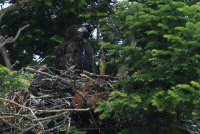
After the female departed, I had the opposite problem when photographing a baby coming out to do its stretching exercises. The babies are very dark, so I had to adjust the exposure from negative back towards zero or positive. Once again I did it by changing the aperature setting.
Check out the developing wing feathers. The baby is definitely out of the downy stage. It must be self sufficient by mid August, when its parents will leave the area for two months.
I had to adjust the exposure compensation back into the negative when the mother returned to perch on an adjacent sentry tree.
One of the parents was drawing the attention of the evil minions of the Dark Lord from its perch in the sentry tree. The compression effect of the telephoto lens makes the crows look as large as the eagle.
A Friday (6/6) afternoon check of the Pt. Edwards eaglets showed them both appearing to be in good health. 5DIII + 100-400L telephoto zoom + 1.4x teleconverter, handheld
The babies are getting very big, which is why the parents only remain in the nest long enough to drop off dinner. Remainder: 5DIII + 500L telephoto + 1.4x teleconverter, tripod mounted
One was stretching its wings, which by now take up much of the nest when spread full. I hope the other one remembered to duck.
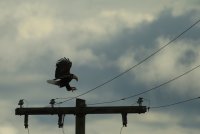
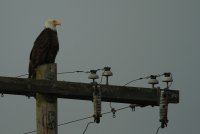
The past two weeks, one of the adults has been taking breaks on the telephone pole by the railroad tracks on flights between the pilings by the Senior Center and Pt. Edwards.
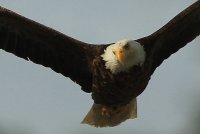
If you are lucky, you will be on the boardwalk of the marsh when the eagle makes a low pass over you and the marsh on its way to the pole.
I knew the eagle was likely to remain perched on the pole for quite awhile, so I relocated to the Anthony's employees parking lot to get the sun behind me.