PNWPhotos.com a friendly and growing community of photographers with an interest in the Pacific Northwest region.
We feature a Photography Discussion Forum and Pacific Northwest Photo Gallery. It's a fun and friendly place to talk with other photographers, ask questions, share you knowledge, view and post photos and more!
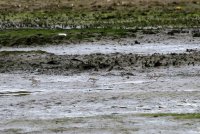
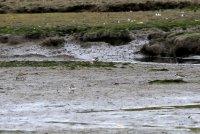
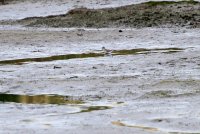
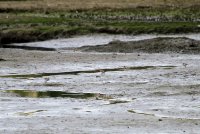
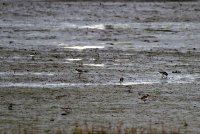
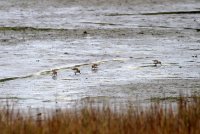
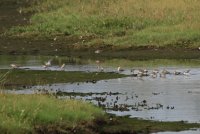
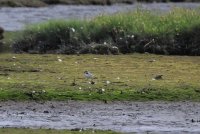
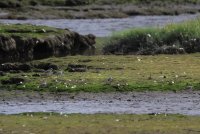
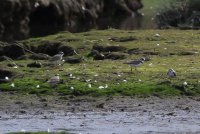
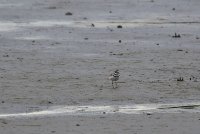
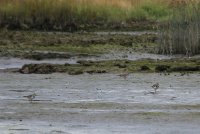
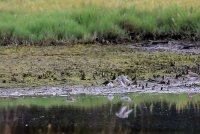
Sunday (8/25) afternoon I saw five semipalmated plovers at the Edmonds marsh together with about an equal number of small mystery sandpipers. The semipalmated plover is a lifer for me, but I did not know what I had seen until I returned home and looked at my photos on the computer. The plovers are so small and were far enough away that I thought I was photographing just more sandpipers.
A semipalmated plover is on the left and the mystery sandpipers are in the center and on the right of this photo.
At first glance the semipalmated plover looks like the much larger killdeer, but the plover only has one dark ring around its neck compared to the killdeer's two rings.
I think the mystery sandpipers were western sandpipers, but it is hard for me to tell. One identifying mark of sandpipers is their leg color, but they all have black legs after wading in the mud of the marsh at low tide.
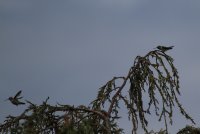
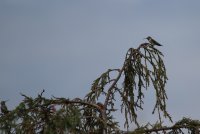
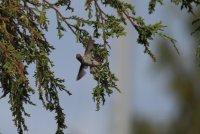
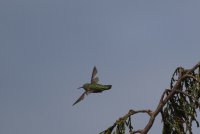
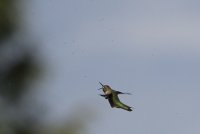
I was back down at the marsh Monday (8/26) looking for shorebirds. I have not seen much of Wesley, the Anna's hummer who guards the #1 viewing platform, but Monday he and another Anna's were putting on quite a show chasing each other.
Not a good photo, but I put it up to show that many of the wing feathers have molted. That did not slow down the hummer at all.
For comparison, here are some killdeer which flew in. At first glance they look like semipalmated plovers, but they are much larger and have two rings around their necks. They are also very noisy.
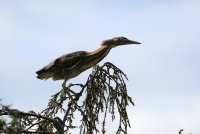
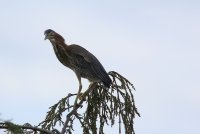
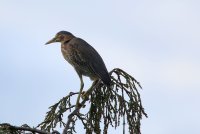
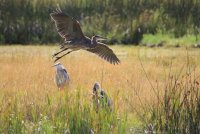
This year a green heron has been spotted in the trees on the south side of the marsh. Around 4:45 Thursday (8/29) afternoon, before the thunderstorm and ensuing deluge, the heron made a rare appearance at the north side of the marsh. The heron was on the ground just west of the #1 (far western) viewing platform, then flew up onto Wesley's perch in a tree behind the viewing platform.
The heron was backlit so I shot in Tv mode with +1 exposure compensation, but I still had to use Picasa's lightening and auto contrast features to create decent shots.
The heron flew back down to the ground and out of sight. A few minutes later it flew east and landed in the mudflat where we photographed Wilson's snipes this spring. I forgot to set the exposure compensation back to 0 and over exposed the shots. Picasa once again helped make them a little presentable.
The heron eventually flew back to the south side of the marsh and went into hiding once again. I hope it becomes a permanent resident of the marsh.
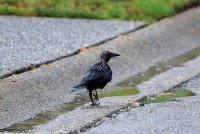
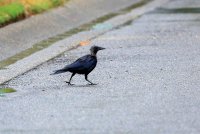
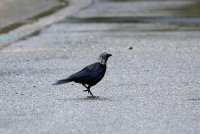
Thursday (8/29) we had one of the hardest rainfalls I have experienced in my 22 years of living in Edmonds. After the rain stopped, I saw what I thought were three gigantic brown-headed cowbirds in my front lawn. I retrieved my camera, but the birds flew off as soon as I opened the front door.
I tracked down one of them on the street and got some photos.
The three birds turned out to be crows whose head feathers had gotten soaked and matted down (or pounded off) in the driving rain. The sun reflecting off their heads gave them a rather odd look.
Wow, those heron shots are really something, Bill!
After I talked with you this afternoon, we attempted to head up to Everett via Olympic View Dr. - hardest rain I have experienced in a long time. All of the drainage from the streets meeting at the Edmonds traffic circle at the fountain routed flood water there. It looked like the Washington Bank was being flooded. We gave up our attempted trip!
Wow, those heron shots are really something, Bill!
After I talked with you this afternoon, we attempted to head up to Everett via Olympic View Dr. - hardest rain I have experienced in a long time. All of the drainage from the streets meeting at the Edmonds traffic circle at the fountain routed flood water there. It looked like the Washington Bank was being flooded. We gave up our attempted trip!
It was one of the heaviest rains I have seen in Edmonds. I blame it all on my next door neighbor, who is originally from India. The rain was probably nothing compared to the monsoon rains of India.
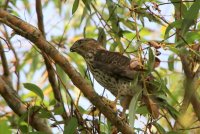
My son and I caught a glimpse of a bird flying into the trees which line the marsh walkway. I thought it was a crow, but I decided I had better check it out. Good thing I did, as it was a juvie Cooper's hawk, probably Junior, the one we have been photographing in the area since last October.
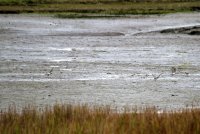
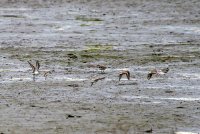
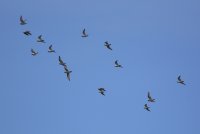
Shorebirds continue to stop at the marsh during the fall migration. Here is a mixed flock of 13 semipalmated plovers and 2 sandpipers taking off from the mudflats.
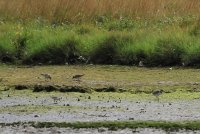
A small group of western(?) sandpipers and a killdeer on the right.
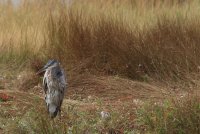
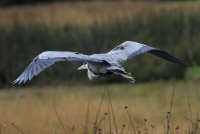
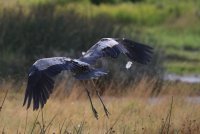
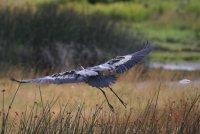
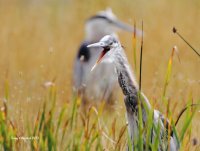
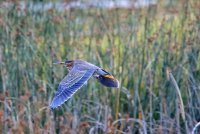
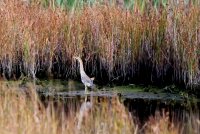
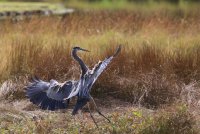
The great blue herons are at the marsh year around, so it is very easy to ignore them in favor of the transient birds. They can, however, create some interesting photos.